Why Does a Slot’s Intro Music Feel Good but Get Old Fast?
A slot’s opening music can make a strong first impression. A few bright notes, a rising chord, and a polished sound cue may establish the game’s mood before you have even studied the rules. Yet after a short session, that same cue can start to feel tiresome—especially if it returns every time you open the game or sits beside a short background music loop.
This is not necessarily a sign that the music is poorly made. Intro music and in-game music have different jobs, and a sound that works well as a brief welcome may not work as well when repeated. The repetition problem becomes more noticeable when the visuals, interface, and audio all compete for attention.
It also helps to understand who is responsible for what. The casino operator presents a selection of games and provides the account and site experience; the game provider produces the slot itself. A game may look and sound consistent inside its own window while being one item in a much larger, multi-provider casino catalogue. That context can affect how the music feels, but it does not change the game’s rules.
What the intro is designed to do
An intro is a compact piece of presentation. It may play when a slot loads, accompany a logo reveal, or lead into the main game screen. Its job is usually to establish tone quickly: playful, dramatic, futuristic, mysterious, or luxurious. A short musical phrase can make that impression without asking the player to learn anything about the game.

Because the intro is brief, it can use a distinctive melody, a dramatic swell, or a sharp sound accent. Those elements are effective in a one-time greeting. They are less comfortable when they repeat frequently, particularly if the game returns to the same opening sequence after being reopened or reloaded.
Intro vs loop: different listening conditions
The distinction between intro vs loop is more than a technical detail. An intro is often composed to be heard once in a while. A loop is expected to continue underneath play, so it usually needs to feel unobtrusive and to join back to its beginning without an obvious break. A musical idea that feels exciting in an intro may be too busy or too emphatic for a long loop.
Audio element Typical purpose Why it can become tiring Intro music Set the mood and introduce the game A memorable phrase can lose its novelty when replayed Background music Provide a continuing atmosphere during play A short or highly noticeable loop can become hard to ignore Event or feature cue Mark an in-game transition or event Frequent repetition can make the cue feel intrusiveThese are common design roles, not a promise that every slot handles audio in the same way. Some games use a quiet bed of background music, while others rely more on brief cues or sound effects. The rules and paytable explain how the game operates; the audio and animation shape how it feels. A dramatic musical swell does not indicate that a win is due, and sound effects do not predict outcomes.
Why the repetition problem appears so quickly
Repetition is part of slot audio design: a game has a limited set of musical material, and players may hear it many times. The challenge is managing that repetition so it supports the experience rather than drawing attention to itself. A short, catchy intro can be especially vulnerable because its strongest feature—the memorable hook—is also what makes it easy to recognize on every return.
A hook has a short attention window
Composers often use a clear melodic phrase or a distinctive sound to make a game feel recognizable. That can work well during a launch sequence. But once the player has heard it several times, the phrase may shift from “that’s the game’s theme” to “there it is again.” The music has not changed; the listening context has.
The loop may be shorter than the session
Background music is usually built to repeat cleanly, but a seamless join does not make a loop feel varied. If a track has only one texture or melody, frequent repeats can become obvious. A longer arrangement, subtle changes in instrumentation, or a quieter mix may help—but those are design choices, not universal features of a slot.
Other sounds add to the load
Music is only one part of the soundscape. Spins, transitions, button feedback, and feature effects can all share the same stretch of play. When several elements are bright or prominent, the overall mix can feel crowded even if each sound works on its own. This is where a player may notice the music getting old fast: not because of the melody alone, but because it is competing with repeated cues and visual activity.
The visuals can make the music feel louder
Slot audio is experienced alongside the screen. Art direction establishes the game’s visual identity through palette, symbols, typography, backgrounds, and character design. When those elements feel https://enyenimp3indir.net/what-makes-a-slot-interface-feel-clean-instead-of-cluttered/ cohesive, the music can seem like a natural extension of the world. When they pull in different directions, the soundtrack may feel more noticeable or less convincing.
For example, a restrained visual style paired with a forceful, busy loop may create a mismatch. Conversely, a vivid, fast-moving presentation can make a simple musical bed feel appropriate. This is about cohesion, not a fixed formula: there is no single correct soundtrack for a particular theme.
UI readability matters, too. If symbols, buttons, or instructions are difficult to distinguish, players may already be spending more attention on the screen. Dense animation and prominent audio can add to that effort. Clear spacing and legible controls do not make a soundtrack better, but they can make the overall experience easier to follow.
Animation is a cross-team collaboration
Animation and music often need to work together. A logo reveal might be timed to a musical accent; a transition may need to finish before the main loop begins; a feature animation may require a cue that stands apart from the regular sound bed. Coordinating those pieces takes more than a composer or animator working alone.
Depending on the production, the work can involve game designers, artists, animators, audio specialists, programmers, and quality-assurance teams. They need to consider timing, transitions, screen states, and how different cues behave during actual play. A sound that feels well matched to a preview video may behave differently in a playable game if its timing, repetition, or volume has not been considered across the full experience.
This collaboration also helps explain why a polished intro does not guarantee that every part of a slot will feel equally polished. The intro may be a carefully staged moment, while the loop has to withstand repeated listening. Those are different production problems, with different constraints.
Who makes the slot, and who presents it?
It is useful to keep the operator and provider distinct. A casino operator runs the casino site, presents games, and typically manages the customer-facing environment, including the player account system. A game provider creates and supplies the slot software and its game-specific presentation, such as its artwork, audio, animation, and rules.
MrQ is an example of an operator brand, while Games Global and Pragmatic Play are examples of companies associated with game provision. Their roles should not be collapsed into one another: an operator’s catalogue can include games from multiple providers, and a provider’s game may appear across more than one operator’s offering. The exact titles and availability depend on the catalogue and market.
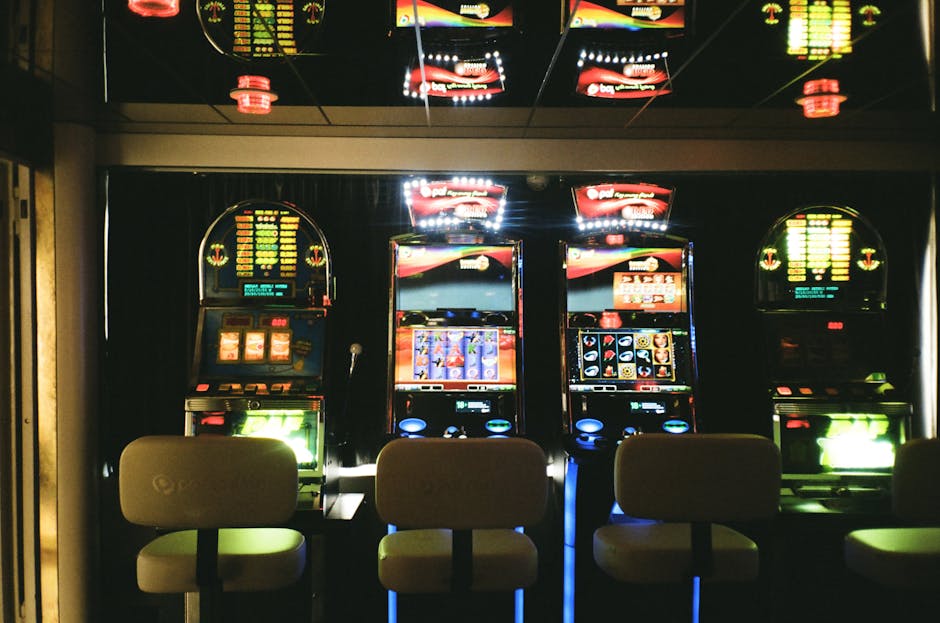
That is why browsing an online casino catalogue can feel different from browsing a single provider’s games. A catalogue may place games with different art directions, sound mixes, and interface conventions next to one another. Moving from one title to another can make a particular intro seem especially loud, repetitive, or distinctive by comparison. The operator is presenting the selection, but that does not mean it created each game’s soundtrack.
Likewise, the player account system belongs to the operator’s service experience, not to the creative identity of every individual slot. The account interface and the game window may be connected in the broader experience, but they serve different functions. A clean casino lobby cannot establish how a provider made a game, just as attractive game art cannot establish that the game is certified or describe its rules.
What players can do when the music gets old
There is no need to keep listening to a track that has become distracting. Many games or casino interfaces offer audio controls, though their placement and options vary. A player can check the game’s settings or the operator’s available controls to see whether music and sound effects can be adjusted separately. Muting audio does not change the game’s rules or outcomes.
- Check the game settings. Look for separate controls for music and sound effects rather than assuming one volume slider affects everything.
- Notice when the cue repeats. If the intro plays on each reload, the irritation may come from the launch sequence rather than the in-game loop.
- Consider the visual mix. A busy screen or rapid animation may make a soundtrack feel more intrusive than it would in a calmer presentation.
- Use the controls available to you. Lowering or muting audio is a preference, not a strategy for changing outcomes.
A brief welcome is not a promise of lasting comfort
A slot intro can feel good because it is concise, clear, and designed to establish a mood. It can get old fast because the same memorable phrase returns in a context where the player expects continuity, not another introduction. Background music has a different job: it must coexist with repeated play, visual information, and other audio cues.
The best way to assess that experience is to separate presentation from operation. The music, art direction, and animation tell you how the game is framed; the rules tell you how it works. Meanwhile, the operator presents a catalogue and account experience, while providers build the games within it. Once those distinctions are clear, the repetition problem is easier to understand: a strong opening is not automatically a comfortable loop.